Weesuwul: When free technology unlocks women’s power
- Senegal
2 July 2026
How a group of women in Dakar transformed learning into livelihoods
Weesuwul began as a four-month digital literacy programme for women in the suburbs of Dakar and gradually grew into a wider journey of empowerment. Through collaborative learning, public speaking and entrepreneurship, women gained confidence, launched businesses and helped create a cooperative model that continues to support economic independence and community-led development.
Background
Learning begins with dreams
On the outskirts of Dakar, in the district of Dalifort, Dalifort HipHop, a local association, started a digital literacy programme for women, inside a system that had long excluded women from digital tools, economic opportunity and public learning spaces.
In these suburbs, women often live within very limited social spaces. There are a few public places where they can meet freely, exchange ideas or speak openly about dreams and struggles. Women mostly live indoors, their days shaped by family responsibility and survival.
The team named the project ‘Weesuwul’, a Wolof word meaning ‘It’s never too late’, a message that reflected the belief that women could still learn, lead and create new opportunities for themselves regardless of age or circumstance.
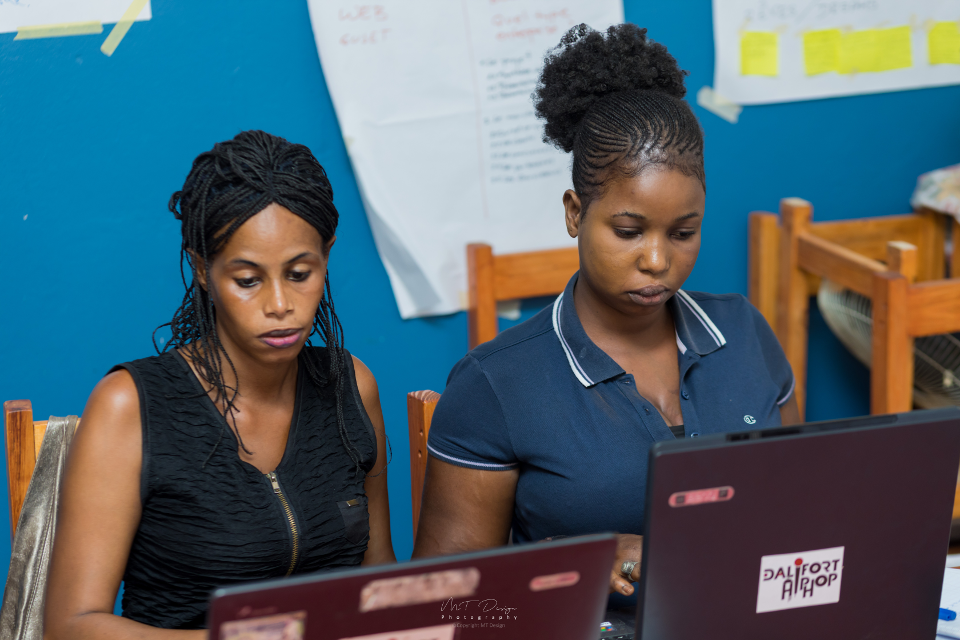
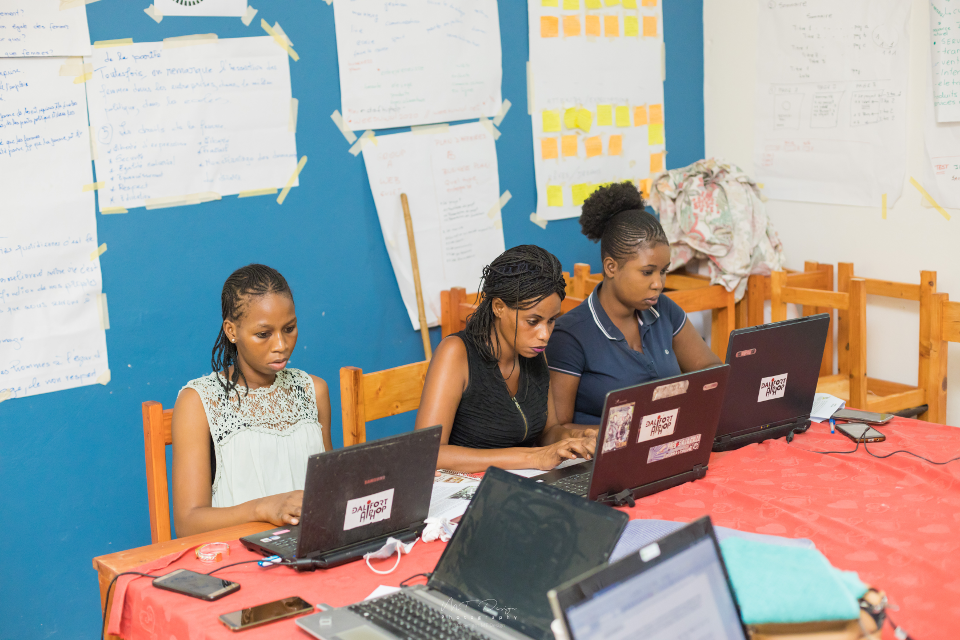
The beginning was far from smooth. The conditions reflected a deeper structural inequality: there was no funding, no computers, no equipped classroom and no shared language that could immediately bridge understanding, and also a pre-existing system that hindered women’s access to formal education structures and opportunities. However, slowly, piece by piece, the environment came together: the local team started to build trust in the project itself and set up the learning space, then a women’s group in Berlin donated computers and shipped them to Dakar. A local association offered a room for a classroom, the team borrowed furniture from different places and a translator joined the first sessions to bridge language gaps.
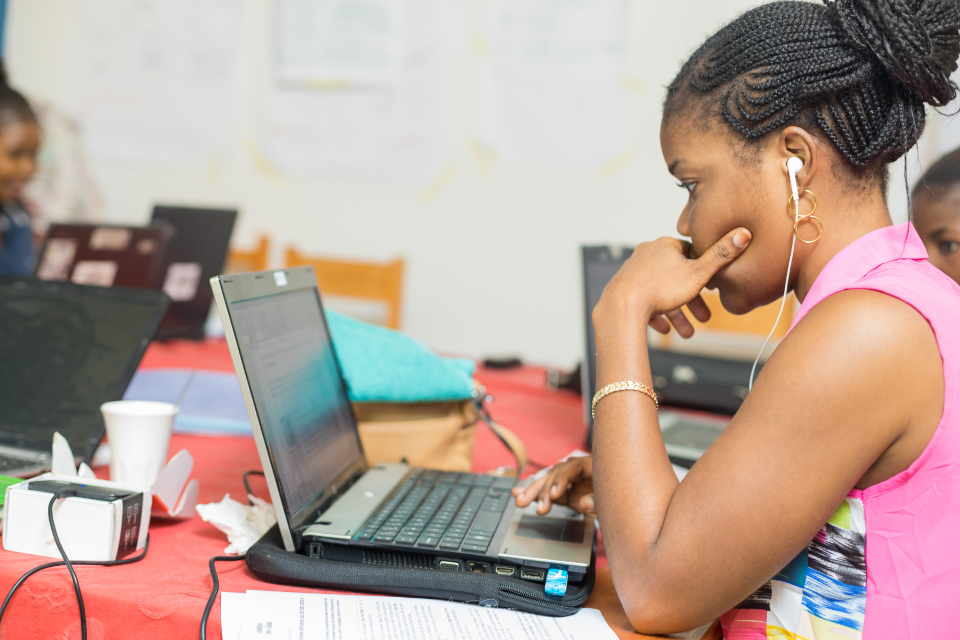
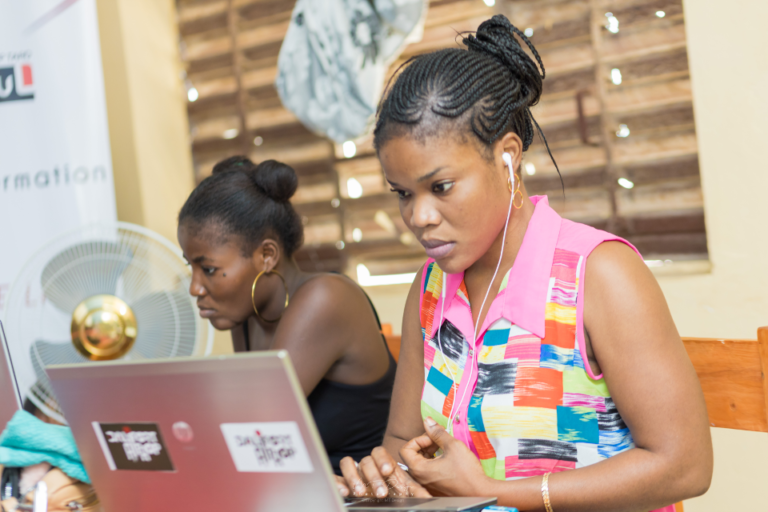
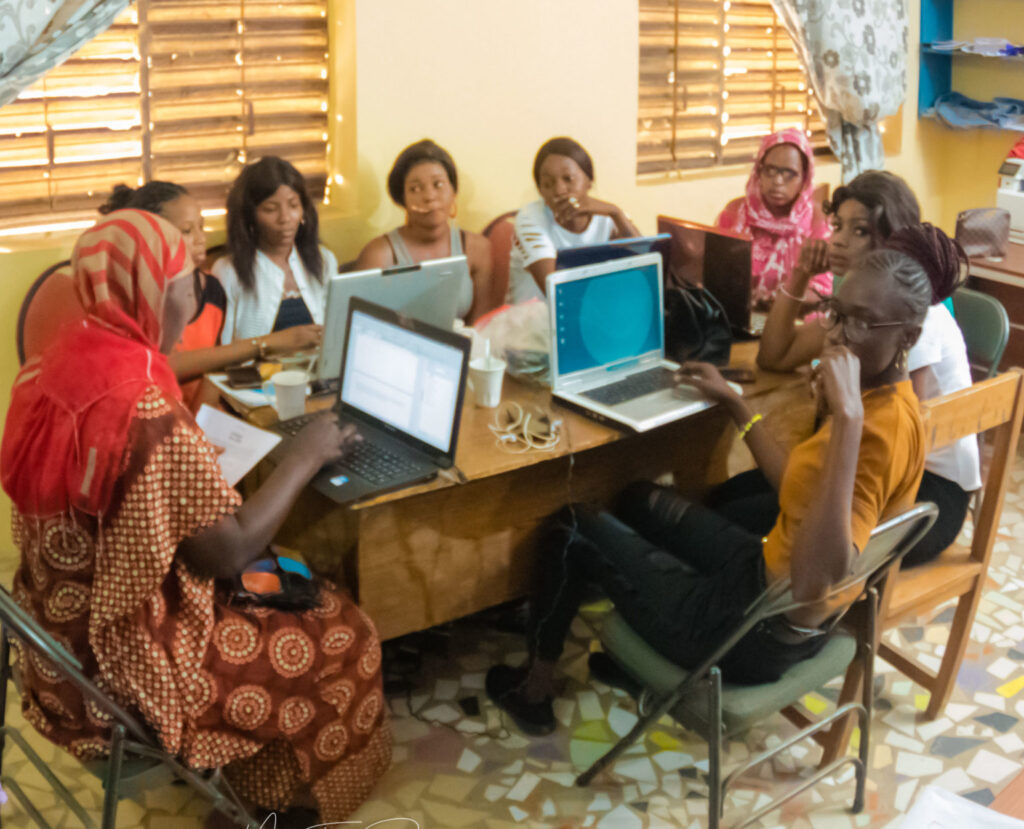
So, Weesuwul started its first cohort with 14 women coming from the surrounding neighbourhoods, most of whom had never had access to such a space before.
Approach
A different way of learning
The project’s approach was grounded in hacker ethic, understanding the hacker not as a rule-breaker, but as someone driven by curiosity to expand their own knowledge within a community of collaboration, cooperation and mutual support. The approach used was:
- Led by dreams and aspirations: The training did not start with computers, it started with listening. The first sessions focused on personal stories, expectations and life goals. Digital skills came later, as a tool rather than a starting point. Technology should serve life, not replace it.
- Rooted: The team designed the learning space to connect with the environments where participants already lived and worked. This reflected a deeper conviction: that knowledge has always existed beyond classrooms, in markets, under trees, in conversation, in ceremonies and through apprenticeships. These forms of knowledge are alive, even if not formally recognised.
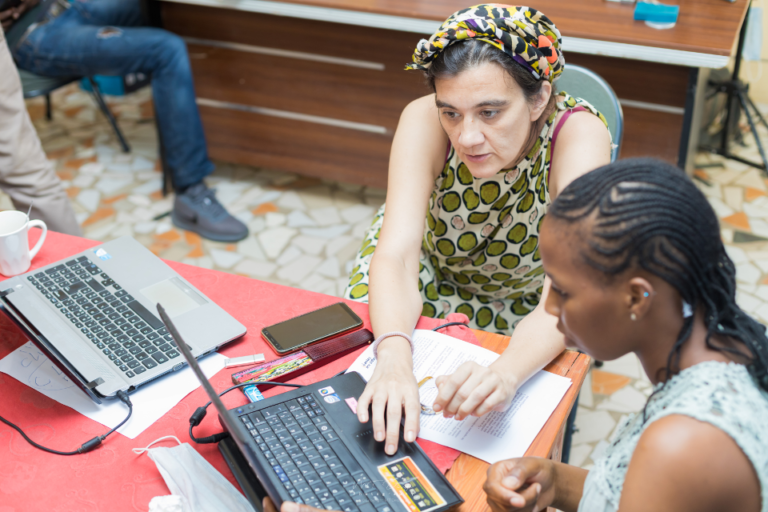
- Collective: Learning also happened collectively. Women worked in pairs, shared tasks and supported each other. This made the process less intimidating and more human.
- Holistic: Digital literacy in the project was not only about using a computer. It included understanding how computers work, learning about women’s contributions in technology history and building confidence in new tools.
- Participatory learning: To broaden perspectives, the project organised panel discussions. Many participants had never attended such events before. Speakers were often women from similar backgrounds, from the same suburbs, who had built their own paths. Seeing someone from the same community speaking with confidence created a powerful shift. Possibility became real.
- Empowering: Another important part of the training was self-expression. Many women were not used to speaking in public or sharing opinions. The trainers introduced public speaking exercises gently, alongside teamwork activities.
Outcomes and impact
From learning to action
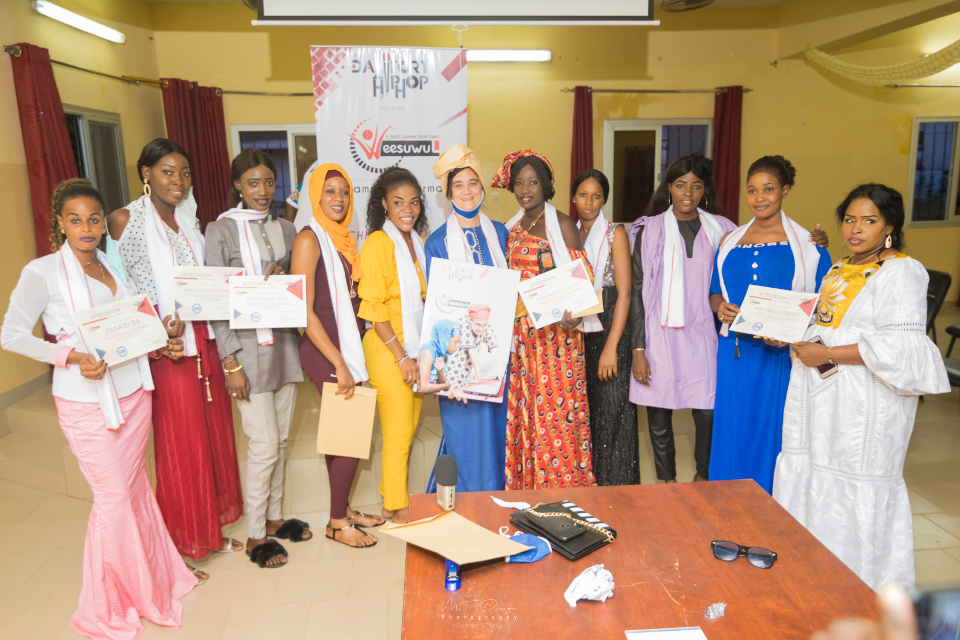
Slowly, voices that had long been quiet began to grow stronger. Across two cohorts, more than 30 women participated in the programme. Before joining, most had never used a computer independently or spoken in public. By the end, many were using digital tools, communicating with clients online and presenting their ideas publicly for the first time.
The impact extended beyond digital literacy. Four women from the first cohort started their own businesses, including online ventures. One participant used income from online sales to continue her university studies after the death of her father. Others used their new skills to support their families and pursue further opportunities.
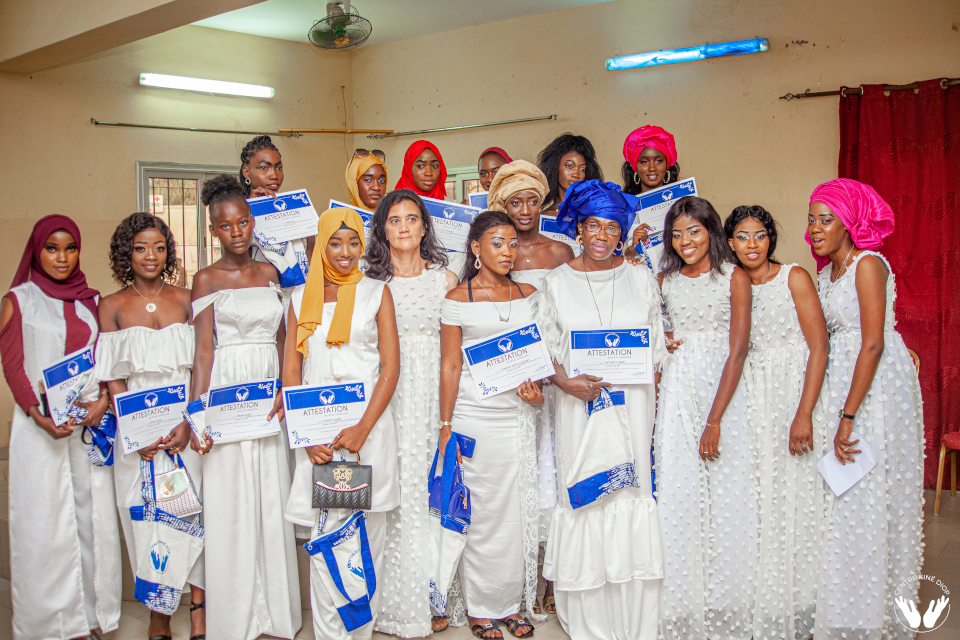
The programme also strengthened confidence and leadership. During graduation ceremonies attended by community members and families, parents were surprised to see their daughters speak publicly with confidence. The project later evolved into Centre Kiné Diop, a cooperative restaurant that now provides regular income to women involved in the initiative.
Voices from the participants
“The Weesuwul training has helped me grow mentally in so many areas, particularly leadership. I’ve set up my own online shop and improved my public speaking skills, among many other things. I will never stop saying thank you.” – Rama
“First of all, I would like to thank Ms Garcia for giving us the opportunity to take part in this initiative, which has enabled us to achieve so much. Thanks to Weesuwul, I have had the chance to learn how to use a computer, which enables me to write my own project proposals today. I have developed entrepreneurial skills, which enabled me to establish and continue managing my own business. I have also improved my public speaking skills, which enabled me to approach donors and secure funding, and it has helped be grow as a leader, enabling me to manage activities and create jobs for others.” – Ouba Gueye
These testimonies reflect a shift that was not only technical but deeply personal. Learning became confidence. Confidence became action.
What changed for the women
By the end of the four-month programme, participants had acquired basic digital skills and more importantly, began applying them in their daily lives and emerging economic activities. Several went on to start or strengthen small income-generating initiatives, including informal businesses and online ventures, while others used their skills to better support household management and children’s education. After the training ended, learning continued informally through peer networks formed during the programme, where participants shared knowledge and supported each other in practice.
In some cases, these relationships evolved into ongoing collaboration in small business activities. The cohort experience also fed into the emergence of G.I.E. Centre Kiné Diop, where economic activities such as the restaurant provided a space for continued hands-on learning and applied entrepreneurship beyond the formal training period.
What happened after the training ended
The end of the training raised a broader question about sustainability and continuity. It exposed how fragile learning initiatives can be when they are not anchored in longer-term structures. In many contexts, education benefits from public systems and institutional support. In others, this safety net is limited, and participation depends heavily on people’s ability to balance learning with everyday realities such as transport costs, time and family responsibilities.
In this context, learning becomes valuable but difficult to sustain over time. At the same time, education is often shaped by a focus on employability and individual progression, rather than collective or community-based forms of growth. This tension raises a broader question about what education is expected to achieve in practice.
From training to enterprise
One of the strongest outcomes of the process was participants’ desire for economic independence. In many African communities, women already play an important role in local economies through informal systems such as tontines, yet access to formal structures remains limited.
This shaped a shift in approach. Rather than relying on external funding, the model moved toward a cooperative structure inspired by Mondragon, where learning and economic activity reinforce each other.
Within this model, a small restaurant became the first step. It served not only as an income-generating activity but also as a space for learning, experimentation and collective decision-making. In the managing of this activity, the women had to face practical challenges brought by Senegal’s informal economy, such as accounting, supply management, customer relations and reporting, which all required continuous adaptation. Even routine tasks became learning opportunities, showing that practice reshapes knowledge rather than carrying it unchanged from one context to another.
Learning across worlds
Western development models often rely on growth, efficiency and individual progress. Many local realities, however, are shaped by collective values, spirituality and survival-based systems.
These approaches do not always align in practice. In Weesuwul, this meant that progress was less about replacing one model with another and more about finding ways for them to coexist.
What mattered most was the way learning unfolded in practice, through listening, adjustment and stepping back so that ownership could emerge from within the group. Without this kind of shift, external initiatives can easily fail to take root in local realities.
Looking ahead
What happened after the two cohorts
Weesuwul has evolved into G.I.E. Centre Kiné Diop, where the economic activities continue while the formal learning space is currently on pause. This transition reflects the reality that community initiatives often shift based on immediate priorities, where survival and income generation can take precedence over structured learning. At the same time, the experience leaves behind an important reflection on continuity.
Learning does not disappear, but it changes form depending on context and need. The question that remains open is how such spaces can remain adaptive and alive, ensuring that learning and livelihood continue to support each other over time.
Learning and recommendations
Lessons from Weesuwul
- Learning should be connected to real life: Learning is most effective when linked to everyday experiences rather than certificates or formal outcomes. When participants apply knowledge in their homes, communities, or economic activities, learning becomes more meaningful.
- Confidence and leadership matter as much as technical skills: Self-confidence, leadership and self-expression often determine whether technical skills are used in practice. Learning is most powerful when participants feel able to act on what they have learned.
- Community support strengthens learning and empowerment: Peer relationships created space for encouragement, knowledge-sharing and collaboration, helping learning continue beyond the training period.
- Learning and livelihoods should grow together: Sustainable change is stronger when learning is connected to economic opportunities, allowing participants to apply and strengthen skills over time.
- Ownership grows through listening, not only teaching: Listening deeply and creating space for participants to shape the process allowed ownership to emerge from within the group, making the initiative more grounded and relevant.
Weesuwul shows that when learning is rooted in community and linked to livelihoods, it becomes more than education. It becomes a regenerative process of collective capability building.
The deeper systems question remains: how can societies design learning and economic structures that evolve together, so that empowerment does not end when a programme ends but continues as part of everyday life?
If you’re curious to learn more about Weesuwul, you can find here a visual record of the learning journey and its impact: radio coverage and video recordings.
This story is part of our impact stories feature and was brought to us by Carolina García Cataño, technical training coordinator at Weesuwul. Do you have a story of systems change happening on the ground? We want to hear from you!