
Science with a heart: healing academia to heal the world
By Filippo Dal Fiore, Professor at the University of Bologna, Independent Social Scientist, Advisor at the Great Place to Work Institute
24 August 2026
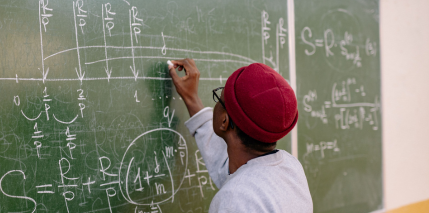
In times of profound interconnected crises, our global academic system struggles to lead humanity towards a better and safer future. Materialist, reductionist and competitive assumptions still permeate the way science and higher education are generally pursued, often contributing to a narrowing of scope, a weakening of societal relevance, a stifling of the spirit and a growing dissonance with the hopes and expectations of the young people around the world. Despite a flourishing of forward-looking and open-ended experiments at its peripheries, the tower remains predominantly made of ivory — self-centrically focused on the vertical silos of disciplines and increasingly aligned with the vested interests of major centres of power and industry.
Where today’s science falls short
What and how we research, teach and learn should be thoughtfully revisited if academia is to help shape a different future for the world. The dominant strand of the system is still moulded by an industrial-age paradigm defined, among others, by the following traits:
• Reductionism: the focus is placed on the individual parts of a system, with little attention to understand the underlying and emergent properties of the whole, nor the bigger picture;
• Quantitativism: the emphasis is on numerically describing, modelling and predicting reality, rather than detecting and describing its inherent qualities and leverage points for transformation;
• Individualism: priority is given to the affirmation of the individual, often regardless of the implications for others and with little awareness of interdependencies;
• Materialism: the assumption that the world is made solely of observable matter, ruling out from the start the possibility that unseen, immaterial levels of reality might exist and play a role.
This paradigm still informs most of science, making it powerful and consequential but also partial and incomplete, misleading, even harmful, when promoted as a source of ultimate truth. This way of thinking also heavily influences how we view and practise education, at all levels, and ends up operating as the dominant software of society.
A new worldview is emerging
History teaches us that no paradigm is final and complete. Sooner or later, each one is undermined and eventually subsumed by a more sophisticated alternative, through a process of cultural and scientific revolution (as poignantly described by T. Kuhn). In this regard, we may be approaching a major inflection point—one in which the dominant materialist worldview, instrumental in shaping our industrial society, gives way to a broader and more evolved worldview.
A broader scientific meta-paradigm is needed, one that restores centrality both to the natural world and to the inner world of human beings, two dimensions long neglected, while broadening and re-purposing the extraordinary ingenuity and technical expertise of the materialist age. Academia and all societal institutions are similarly called to progress — from partisanship to genuine collaboration, from self-centredness to system-centredness, from egocentrism to ecocentrism.
What needs to evolve, before anything else, is human consciousness. We, as humanity, are called to engage in personal and collective healing, transcending the long-standing fears and desires that prove destructive, self-defeating and, not surprisingly, unscientific and untruthful. In this respect, a guiding intention behind a new meta-paradigm would need to be healing (through being fully human), in a way that integrates and elevates the current one, which is still predominantly aimed at producing (through instrumentalising human doing).
A new form of science, what I call ‘science with a heart’, is emerging from the present phase of transition. This approach will expand the scope of science at all levels – questions, objectives, epistemologies, ethos, systems of validation – moving beyond the outdated assumptions and over-emphasised analytical methods that limit its capacity to serve. In my view, the human, social and medical sciences will have to be rethought from the inside out— anchored in a heart-based awareness of reality and in a positive, life-affirming language, for it is ultimately our narrow self-views, narratives and beliefs that shape our consciousness, perpetuating suffering and blocking evolution. By refocusing on the inherent dignity and power of human beings, as well as their potential to align with the ultimate resilience and benevolence of life, these disciplines could help catalyse a profound cultural and civilisational shift.
The urgency for an alternative and complementary academic system
Given these premises, envisioning an alternative and complementary academic system is far from a utopian exercise; it is, rather, an act of civic responsibility. We need to revise the purpose, culture and content of contemporary academia, cultivating emotional maturity as much as intellectual development, because how and why we do things matters as much as what we do.
We might begin to relate to students and academic outsiders with more humility and open-mindedness, further diversifying the range of perspectives, ideas and voices we emphasise and pass on to them, as well as empowering them as generators of the kind of truly original thinking we urgently need. We might move beyond writing articles primarily for career advancement, allowing them to arise from a sincere inner inquiry into what each of us genuinely cares about and what longs to see flourish in the world.
We might also critically examine our often ideological attachment to antiquated theories and canonical authors, which, where appropriate, would need to be released. For example, most economics textbooks still tend to emphasise that the ultimate purpose of a corporation is to maximise profits for shareholders, despite all negative “externalities”. Similarly, most academic departments of medicine may marginalise or overlook integrative medical traditions from the majority of the world, despite their relevance to a more holistic, human-centred and indeed effective practice of healthcare.
This renewed vision and practice of academia is already taking shape, as more and more of us scientists, educators, professionals and students are awakening to the need for deep personal change. Many of us are beginning to prioritise our own wellbeing and mental health, as anchors for a more authentic way of contributing to truth-seeking and to our own vocations. In doing so, we often operate at the margins of the mainstream system; hence, we have a powerful incentive to come together and co-create large-scale initiatives.
Through these and many other contributions, a renewed and more enlightened academic system may gradually emerge —not in opposition to the current one, but as a viable and life-affirming alternative to offer our beloved humanity in these times of great crisis and great possibility.

No comments yet