
Hope, agency and creativity, three tools to rethink education
An interview with Jack Davies, Creative Educator and Campaigner, World’s Largest Lesson, Project Everyone and Making Movements by Mafe Matera, Communications Fellow 2026 at the Club of Rome
6 October 2026
Credit: UNICEF Jamaica
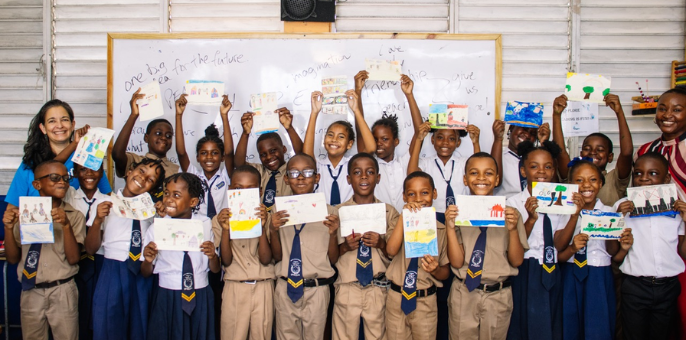
What if education was less about following instructions and more about giving young people the power to act? In this interview, Jack Davies shares his experience of how we can reframe education to build agency and imagination in young people and nurture new generations equipped for real-world problem-solving.
What do you think does not work in the current education system when it comes to translating knowledge into agency?
Sometimes you can be designing lessons and you sort of get wrapped up in that, and you forget what it’s like to be a kid in a class. Personally, I felt kind of frustrated at school with the lack of choice, so now I think if you want to build agency you have to give people the space to make decisions. You must ask genuine questions, genuinely listen to the answers and act on what you hear.
More fundamentally, if you want to build agency, you have to make schools places that focus on building agency rather than just building knowledge or building obedience or fitting into certain tests, regimes and schedules. That means handing over some power to students, which, as a teacher, is kind of a scary thing to do, but it works.
How does this approach look in practice? What methodologies have worked for you?
We have to create spaces – in schools, in communities, in companies, in government – where ordinary people have some power to genuinely contribute to the way things are running. Less hierarchy, more collective responsibility. If you feel empowered you get up and take responsibility. You try to make the world a better place, instead of throwing stones from the sidelines. That’s what I try to do with education. Help young people find their power, so that the world becomes something they can change, not something that is fixed.
An example on how to do is project-based learning. I like getting children and young people into groups, giving them a task and then step back to see how they handle it. The key is letting them fail, letting them make mistakes, having fun in the process and giving them as much ownership as possible in how they solve the problem.
The core is creating space for them to reflect and share with each other, while using creativity to help them loosen up. I think listening and creativity are two nice tools for engaging young people’s anxiety and then channelling it into something more hopeful.
When does learning stop being abstract and become real among youth?
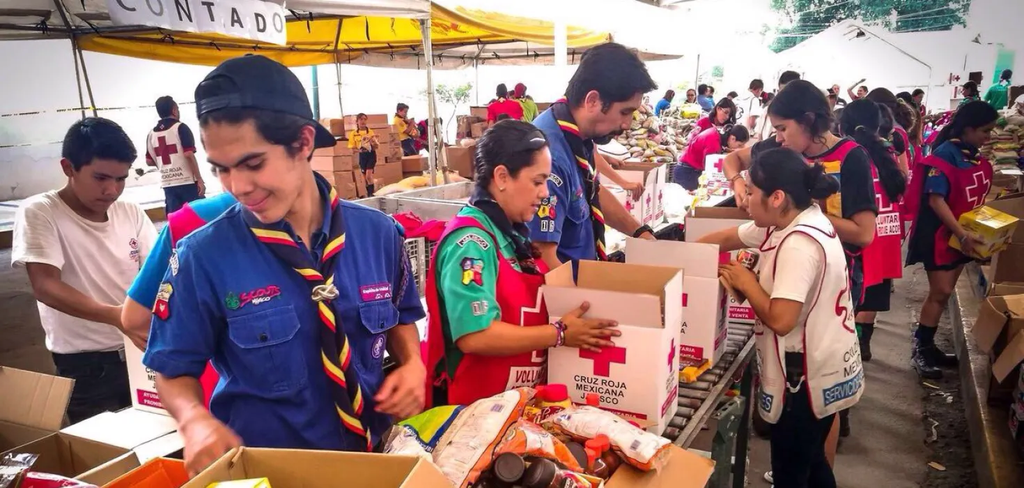
I think a really nice way to make things happen is to invite young people to go into their communities and do something on a practical level.
Credit: World Scouts
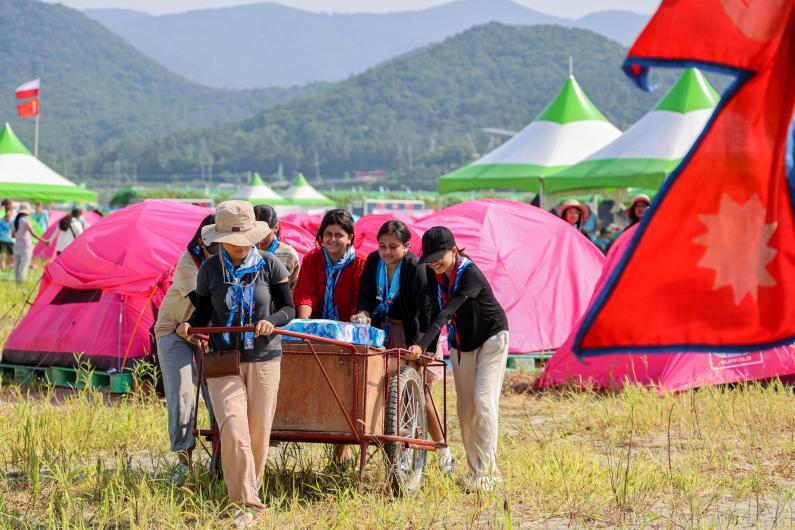
An example that comes to mind is the work we did together with The World’s Largest Lesson and the Scouts, a youth movement focused on practical outdoor activities. Since badges are a big motivator for Scouts, we created one called Impact Innovators. They had to put into practice a framework using design thinking: identify a problem in their community, think creatively about solutions, and then try it out. Maybe it worked, maybe it didn’t, but the process is real. You’ve gone from thinking to doing.
Credit: World Scouts
How can we design education to cultivate hope?
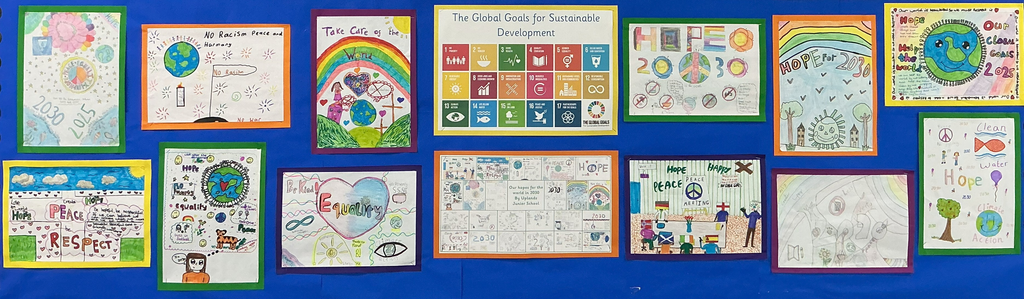
Hope emerges from imagination. Paulo Freire, Brazilian educator and philosopher, said: “There’s no change without dream as there’s no dream without hope”. So, for me it’s all about imagination. This is something that is often missing or constrained in school, but if you can’t imagine how the world could be different, then you can’t hope for something else and you certainly cannot change it. And in order to design education processes that cultivate hope, we need the tools that make imagination possible, like playing, having fun and light spark of curiosity and creativity.
What does hope look like when you’re working with teenagers? Especially when we’re talking about facing the climate crisis.
You can’t really tell teenagers to care about the planet or that they need to go and change the world. You must understand where they’re coming from and what they’re interested in, then translate that into their language and offer them perspectives that feel relevant to their lives and make them feel it’s worth participating somehow.
The reality is that teenagers, like many adults, feel quite overwhelmed by the state of the world and are not sure how they could ever make an impact. As a teacher, sometimes you feel that you need to have the answers, but I’ve found it’s much more powerful to start by being honest: “The world is a crazy place and we’re all trying to work it out”. Create that shared vulnerability, acknowledge that we’re all worried and we all have hopes for the future, so let’s talk about what those are and then build from that point.
How should vulnerability be handled? How do you create a safe space, and how should adults prepare to handle the emotions that arise?
There is a big risk talking about all these big questions with young people because it can bring up big emotions, and if you’re not qualified to deal with that, then that’s quite an irresponsible thing to do. But here’s the key: frame the work around hope, not fear. Instead of asking “What are you worried the world might become?”, ask “What would you like the world to be like?” That shift keeps the conversation in a much safer space because it’s positive, imaginative and playful, but still gives young people space to think deeply.
Credit: Project Everyone
Where does your own sense of agency and drive come from?
Sometimes people get put off from thinking about the world’s problems because they seem too big and depressing, so they just bury their heads in the sand and avoid it. I feel everyone would feel better about the world if they were playing a more active part in helping to change it. We need to make changing the world more attractive.
That’s what I’m trying to do with Making Movements: it’s all about connecting social change to arts and culture, to make it irresistible. It’s not a duty, no, this is fun!
This blog is part of a series to introduce Constellations of Hope, a book with a collection of real-life experiences of researchers, educators and practitioners around the world who have explored new learning paradigms.
‘Constellations for Hope’ is a new report to the Club of Rome and is coming out on 4 November at the International Conference of the Club of Rome. Sign up here!
The book is part of No Limits to Hope, a collaboration between The Fifth Element and the WEEC Network.
No comments yet