
Decolonising education: rethinking what and how we learn
Interview with María Angélica Mejía-Cáceres, Educational Program Development Manager at Learning Planet Institute, and at Université Paris Cité, by Maria Fernanda Matera, Communications Fellow 2026 at the Club of Rome
20 October 2026
Credit: Pexels
When the Colombian researcher María Angélica Mejía-Cáceres was starting her academic life in the field of environmental education, a biology professor presented scientific content to the class but skipped several slides, telling the group of students from the Faculty of Education, “You don’t need this information.” This differentiated treatment excluded the students from part of the scientific content on the basis of their academic background.
A dismissal that showcased the unofficial and unfair hierarchy in which some ways of knowing count as science and others are filed away as secondary, less important. How to dismantle the rigid, egocentric knowledge models attached to colonised mindsets? Who decides what knowledge is valid and who is deemed “fit” to receive it?
From her studies in Colombia to her doctoral work in Brazil, Mejía-Cáceres has arrived at one answer: make space for multiple, situated and historically marginalised ways of knowing in our spaces of learning. “Science is knowledge, and knowledge is not neutral: it is social, contextual and historically built,” she argues.
Mejía-Cáceres now works in project-based learning and action research, guiding student projects on local socio-environmental problems. That work has led her to advocate for learning processes in which local and historically marginalised forms of knowledge can shape how problems are understood and questions are framed, while entering into dialogue with other ways of knowing rather than being treated as separate or subordinate forms of knowledge.
A necessary shift: decolonising academic processes
Unfortunately, academic solutions continue to be designed from a distance, completely detached from communities, and this disconnected mindset persists. That detachment is no surprise; it is part of a pattern. It is a common mindset that accompanies people from their early years and must be questioned within academia.
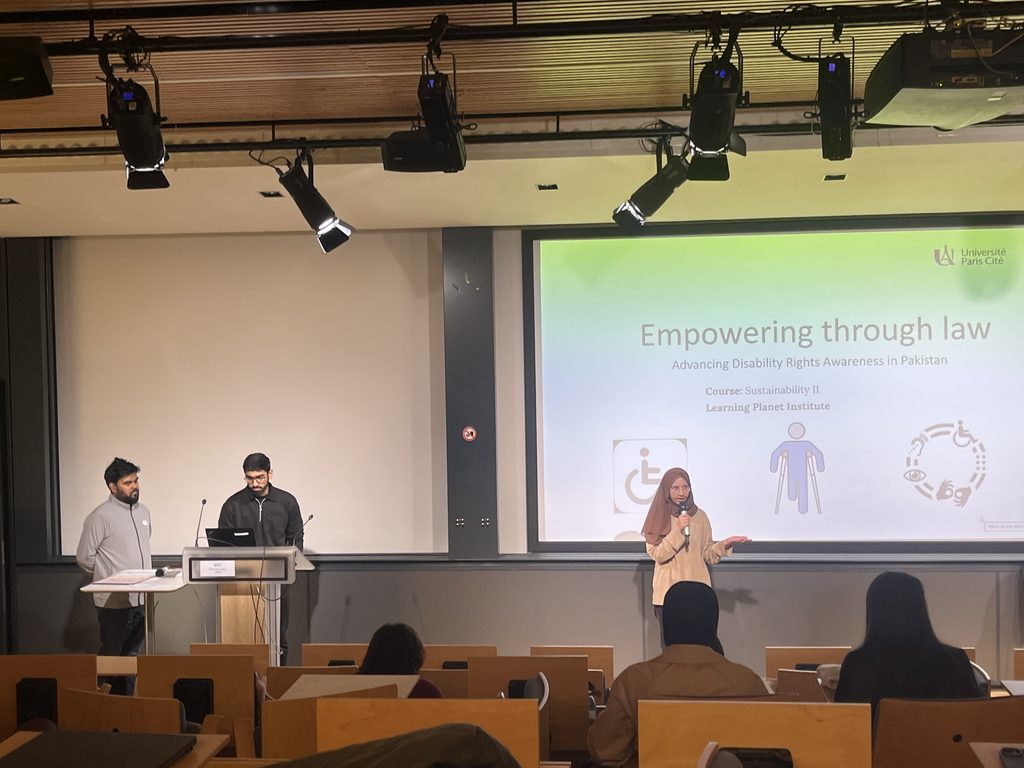
Mejía-Cáceres remembers working with a group of students who wanted to improve the lives of people with disabilities in Pakistan by helping them learn about their rights. When she asked a seemingly simple question: “What do people with disabilities in Pakistan themselves say they need?” the students realised they did not yet have an answer. Their proposed solution had emerged before they had fully understood the problem. For Mejía-Cáceres, this became an important learning moment: it highlighted how easily we can approach communities through assumptions about who they are, what they need and how they should be helped, rather than engaging with them as participants in defining the problem itself.
“Many times, we want to implement one project and we are there acting as the «saviours», when the people already have a process, and it needs to be the reverse: how do I listen first and see how I can contribute to that?”, she comments.
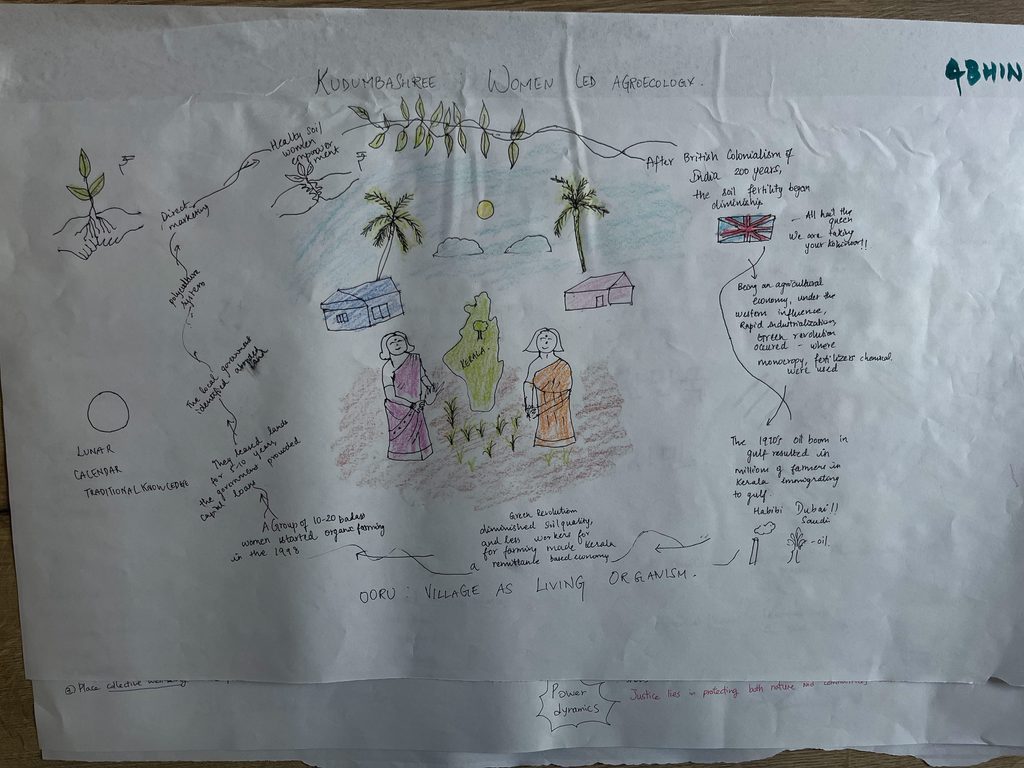
That is why, in order to see change, a decolonial and systemic vision should inform how we approach learning, and she aims to help her students see it in the classroom. This shift, from arriving with answers to beginning with questions, is at the heart of placing Indigenous and other historically marginalised ways of knowing to enter in dialogue with other epistemologies.
Credit: Learning Planet Institute
Understanding communities and drawing boundaries
Decolonising education requires placing the local context at the centre, but bringing these forms of knowledge into education requires more than simply adding a local perspective to a syllabus. It also requires clear boundaries around who can speak, who can represent a community and how knowledge is used.
In the case of Indigenous knowledge, for example, Mejía-Cáceres warns of the risk of generalising all communities and treating “Indigenous knowledge” as one homogeneous category. Different communities have different histories, relationships with nature and ways of understanding the world. Even well-intentioned efforts at inclusion can reproduce the hierarchies they seek to challenge.
Cultural appropriation is also an important issue to consider when establishing clear boundaries and drawing them from the beginning. Respect and voice, she argues, are essential. Researchers and educators cannot assume that having access to a community gives them permission to speak for it. As Mejía-Cáceres notes, “sometimes we think that because we are academics, we can speak for people, even without asking them if we can do that.”
Credit: Learning Planet Institute
How can we put this into concrete actions?
To spark this change, each semester Mejía-Cáceres introduces “epistemic tension” to her students, who come from different nationalities and backgrounds. This exercise involves asking questions and listening to different positions to understand why people think the way they do. In her contribution to Constellations of Hope, the most recent report to the Club of Rome, Mejía-Cáceres explains that this “exposes complexities invisible in single-paradigm approaches, redefining partnerships as horizontal dialogues of knowledge”.
For this activity, Mejía-Cáceres starts with a question: “What does the environment mean in your culture?” At the end, the answers reveal that a concept often presented as universal can carry radically different meanings depending on people’s histories and contexts, and that scientific explanations do not necessarily invalidate empirical or ancestral knowledge. “My role is to show that there are different discourses and different practices. It’s up to them to choose which one they want to follow, but they need to know that there is not just one discourse that exists”, she says.
When established hierarchies are questioned, this opens the possibility of what Mejía-Cáceres describes as cognitive justice: recognising not only that different forms of knowledge exist, but also that they are diverse, contextual and connected to real people.
This complements three ideas rooted in the philosophy of the Brazilian educator Paulo Freire: the need to be open to difference, the recognition that we are unfinished beings who never stop learning and the acceptance of our own incompleteness and, therefore, our need for others.
These principles are ultimately a reminder that education cannot be truly transformative while some forms of knowledge remain above others. By making space for plural epistemologies, we acknowledge that no single system has a monopoly on understanding our world. To truly learn, and address complex problems, we must fundamentally look beyond rigid structures and embrace the vital value of multiple ways of knowing.
***
If you want to know more about how María Angélica Mejía-Cáceres is applying decolonial approaches to the learning process, don’t miss Constellations of Hope: Cases and Perspectives of Transformational Learning, a new report to the Club of Rome, where she features her insights.
Constellations of Hope compiles real-life stories and solutions from global educators, researchers and practitioners who are redefining how we learn and teach. The report will be officially launched on 4 November 2026 during the International Conference of the Club of Rome. Sign up here!
No comments yet