
Hope Has Two Daughters
Dilek Sayedahmed
Hope Has Two Daughters grows from a question that follows me from the economics classroom to the city sidewalk: how does anger at the world as it is become action towards the world as it could be? The piece understands hope as a practice with material conditions, found in everyday acts of care, participation and refusal, and in systems we choose to make differently. Its two daughters move between the intimate and the collective: one insists that this cannot continue; the other stops, notices, moves the chairs and begins.
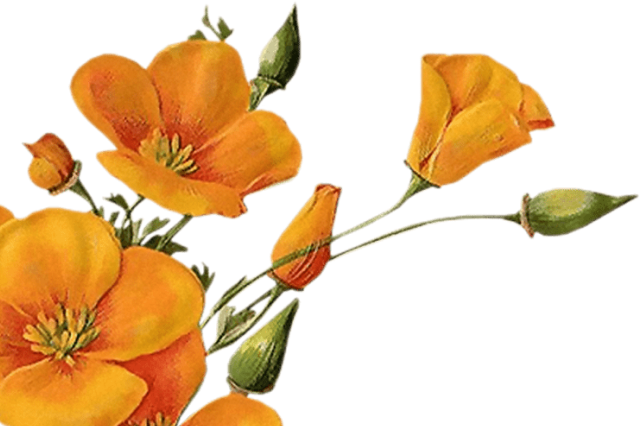
Hope Has Two Daughters
Hope has two daughters. The first refuses the world as it is, fumed in rage. The second asks what that refusal requires of us, collectively.
I know the first daughter well. These days, she is never difficult to find. Open your news feed. Pick up your phone. Look out the window. Sometimes just open your eyes. She has seen the math: who gets counted, who becomes collateral, whose grief receives a flag, whose body becomes uncomfortable scenery we scroll online and pass on the morning walk to work. She knows what we have learned to walk around, tiptoe gently past, hesitant to sound too political. Why is this child deserving and not that one? Why this border? Why does one death stop everything while another becomes a number we scroll past? Who decided? When did we agree? When did safety and atrocity become synonyms? Who allowed that economically? Socially?
I am an economist, an inconvenient thing to be when asking these questions. I start every lecture by telling my students something economics has spent extraordinary energy teaching us to forget: human beings are astonishingly altruistic, and we cooperate. Remarkably well, actually. Psychology, anthropology, neuroscience, evolutionary biology keep returning to our capacities for empathy and cooperation. Among mammals, we are supreme cooperators. We care for people who cannot repay us. We make things together that none of us could make alone. A meal, a neighbourhood, a movement, a world.
Yet. Something has gone horribly wrong. Economics, sadly, my own discipline, has fingerprints all over it. We built a story about human beings and then institutions for the people in the story. Compete! Accumulate! Optimize! Grow! Call it rational. Because what else? Repeat long enough and a story begins to resemble human nature. Repeat longer and it becomes an economy. Longer still, a world. Look around. C’est la vie, n’est-ce pas?
Perhaps this is why hope begins with an angry daughter. She refuses the word inevitable. This cannot be all that we are. Her sister puts on her shoes.
There is a person sleeping on the sidewalk. Unhoused, they say, as if by choice and not design. You know the manoeuvre, as I know it too. Eyes forward. The subtle art of ignoring. If we donot look, perhaps they do not exist. A slight adjustment of trajectory. Whole cities choreographed around bodies we have decided not to see. Some days I say hello. Sometimes I bring food. Most days I still pass. I do not want to write myself into the good part of the story simply because I know the vocabulary of the bad one.
The first daughter says: look. Her sister stops.
She asks a name. Calls the friend. Cooks the meal. Notices the neighbour. Walks a stranger to
the métro. Asks who is missing before the room begins deciding. Tiny things against the size of what we have built. Yet enormous systems are made from tiny repetitions. A market is repetition. A border is repetition. Looking away is repetition. Perhaps care can become one too. Perhaps we have been measuring the wrong infrastructure.
I wonder what would happen if tomorrow’s news said: you all get universal income, housing is secure, healthcare is yours, there is enough food, there is an income floor beneath you. You may rest. Imagine millions of shoulders dropping at once. How many bodies have we been treating for symptoms of systems?
Hope has material conditions: architecture, budgets, sidewalks, time. Who gets to decide?
Economies are designed. Institutions are designed. Somebody decided what counts, what can be owned, who sits at the table and who receives the minutes afterward. Here is the thought I cannot leave alone: the world is something we make. Which means we could easily make it differently. I live inside that sentence. I teach inside it.
And people already are: communities govern commons, neighbours feed one another, residents decide how public money should be spent. Somewhere, right now, somebody is practising a future the rest of us have been told is unrealistic.
Economics gave us trickle down. Even the metaphor asks those at the bottom to wait. Wait for growth, investment, prosperity. Slowly, apparently. A rare moment when economics discovers patience. I prefer starting at the down. Start with the people who live the consequences. Give them the chair. Give them the budget. And then listen.
Hope, perhaps, does not trickle but it rises.
The second daughter starts where another system is already trying to breathe - sidewalk, kitchen, classroom, community hall, land. Knowledge travelling in more than one direction. Care treated as infrastructure. Land encountered as relation rather than inventory. Perhaps the future does not need to be invented from nothing. Perhaps it needs to be noticed. There are other ways of being human already in circulation.
The mother cooking gives me hope. The stranger noticing and waiting gives me hope. The
person told she knows nothing about economics deciding where the money goes gives me hope. The stubborn human habit of making a we where there was supposed to be only an I gives me hope.
And anger. I need the anger. The first daughter looks at the world and says: absolutely not. The second moves the chairs. One makes another world imaginable. The other begins building it.
Some days I stop. Some days I still pass. The honest thing is to leave both sentences here. Hope asks what we do next.
So here is the sidewalk again. There is the person I have passed before. There is my body already beginning its little turn. Then, occasionally, it doesn’t. No revolution announces itself. The traffic light changes. Someone behind me keeps walking. Someone notices that I stop. Then stops as well. Then another.
The first daughter says: this cannot continue. The second says: come here.
Bring the chair. Bring the neighbour. Bring the person nobody thought to ask. Bring your anger. Bring food.
We have a world to practice.