Webinar: African environmentalism of soil
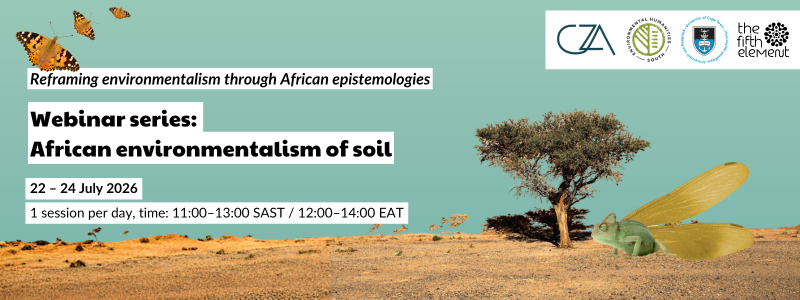
Welcome to the first cluster of our webinar series ‘Africa, climate and education’!
Together, we will explore African environmentalism by centring soil as both substance and metaphor. Despite accelerating global degradation, soil science is being defunded, threatening Africa’s food security, ecosystems and indigenous knowledge systems. Soil is a living archive of history, culture and ecology, yet modern institutions reduce it to an industrial resource.
Across three sessions, the webinar series seeks to restore soil’s ecological, cultural and ethical significance by linking traditional knowledge with modern science and by placing soil within broader struggles for land justice and environmental sovereignty in Africa.
Session 1: Soil futures in Africa
Date: 22 July 2026
Time: 11:00–13:00 SAST / 12:00–14:00 EAT
Africa’s soils are in crisis, and the stakes go far beyond farming.
Decades of industrial agriculture, land degradation and underfunded soil science are threatening food security and ecological stability across the continent. This session reframes soil health as a question of sovereignty, not just agronomy. We will explore land restoration as an act of geopolitical self-determination and examine why the Green Revolution failed African soils and what agroecological alternatives look like.
Watch the recording
Session 2: Soil as habitability: archive, ancestor and peaceful accord
Date: 23 July 2026
Time: 11:00–13:00 SAST / 12:00–14:00 EAT
What does soil mean to Africa, beyond the economic and the political?
Soil is a living archive of memory, ancestry and cultural identity, and a site of historical dispossession that demands reckoning. In this session, we will explore what becomes possible when modern science aligns with community-led stewardship and how ancestral worldviews frame land as living inheritance connected to questions of justice and reparation. A panel from African environmental humanities and land sovereignty closes with a structured capture of indigenous and ancestral knowledge.
Watch the recording:
Session 3: Soil, justice and regenerative education: Amilcar Cabral
Date: 24 July 2026
Time: 11:00–13:00 SAST / 12:00–14:00 EAT
What if one of Africa’s greatest liberation thinkers was also a soil scientist?
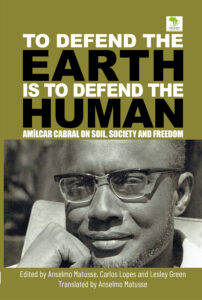
Amilcar Cabral understood over 75 years ago that soil ecology and political liberation were inseparable. This closing session marks the launch of “To Defend the Earth Is to Defend the Human”, a new publication exploring Cabral’s remarkable contribution to what we might now call soil social science.
In this session, we will trace how his understanding of soil was rooted in a politics of human dignity and ask: what does Cabral’s legacy demand of how we teach and institutionalise environmental knowledge today?
Watch the recording: