
How artistic thinking can heal a mechanistic world
By Michael Chèze, Systems thinker, humanist and filmmaker
4 December 2025
We live in an age of extraordinary technological marvels. We can speak across vast distances, map the intricacies of the human genome, and transmit vast sums of money with a single click. Yet beneath this brilliance lies another story, a much more disturbing one: of planetary crisis. Our forests are shrinking, our oceans warming and acidifying, and our societies fracturing under the strain of constant material growth and acceleration. We have achieved mastery over matter, yet seem unable to master ourselves.
The root of this malaise is not simply technological or political. It lies in the way we, as humans, have come to think. For many centuries now, our world has been shaped by a metaphor that is so pervasive that we no longer see it: the metaphor of the machine. When early scientists looked up into the heavens, they weren’t looking for mystery; they were looking for mechanism. The world, they came to believe, was like a giant clock. Nature, once regarded as alive with spirit, became a system of parts governed by fixed and immutable laws. In this way of seeing, to understand meant to be able to predict, and to predict meant to be able to control.
This shift was breathtaking in its consequences. Emerging first in Europe and later spreading through colonial and industrial systems, the Industrial Revolution applied it to matter, capitalism applied it to labour and economics applied it to the Earth itself. Forests became ‘timber resources,’ rivers ‘water assets’ and people ‘human capital.’ In many parts of the world, the living world was translated into numbers – measurable, manageable and monetisable.
Mechanistic thinking sees the world as something separate from us – an object to be analysed, dissected and used. This kind of thinking prizes speed, efficiency and quantification. It trusts only what can be measured and distrusts whatever cannot. This has given us astonishing technological mastery, but it has come at the cost of spiritual and ecological coherence. The planetary crisis – climate change, biodiversity loss, rising inequality – is not an accident of progress. It is the natural consequence of a worldview that knows how to build but not how to belong, conserve and protect.
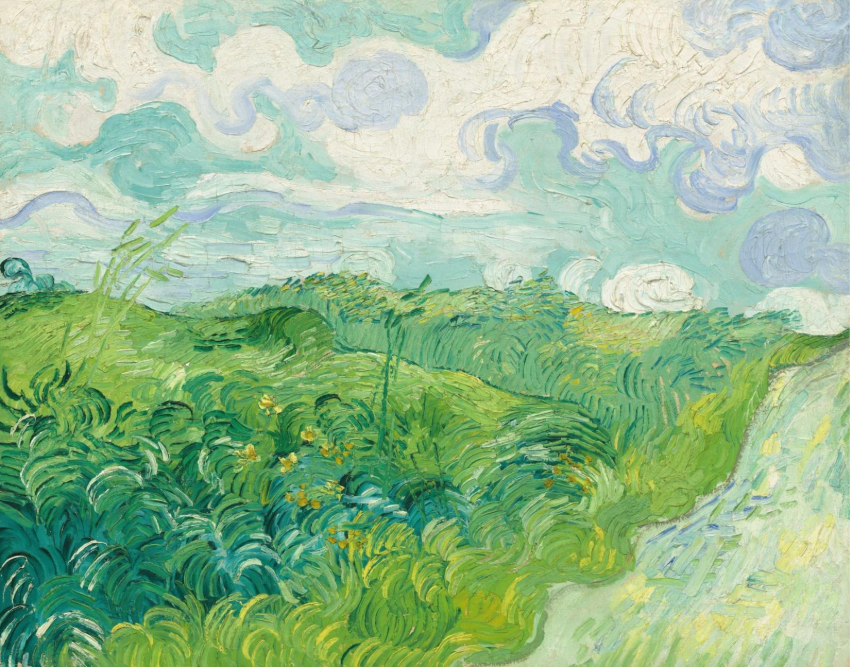
Yet there is another way of thinking. Art represents its purest form. The artist does not stand apart from the world but enters into dialogue with it. The creative process begins not with a sense of prediction or certainty but with curiosity – a sense that something will emerge in time through artistic engagement. It unfolds naturally through attention, intuition and trust in what cannot initially be seen. This way of working is not about control; it is about participating in a process of discovery.
The differences could not be more stark. Where the mechanistic mind seeks mastery and control, the artistic mind seeks relationship. Where the machine accelerates and optimises material throughput, art invites us to pause and contemplate. To think as an artist is to experience the world as fascinating, alive, complex and dynamic – a field of living connection rather than a set of disconnected objects.
Both the mechanistic mind and the artistic mind create, but they do so in very different ways. The first values speed and scale; the second values depth and meaning. The first often seeks to strip away what it sees as superfluous to create uniformity, the basis of mass production; the second seeks to understand, respect and reflect the uniqueness of each subject.
Our planetary emergency is often framed in technical terms – emissions, policy, growth – but at its core, it is a crisis of seeing, a crisis of imagination. We have forgotten how to see the world as connected and alive. We measure GDP but not joy, carbon but not compassion. We produce tools that extend our reach but narrow our sense of relationship. Mechanistic thought has stripped life of meaning, reducing creation to production and experience to consumption. What is needed now is not simply new technology or policy, but a new way of perceiving – a recovery of the artist’s way of thinking and being. The ability to connect deeply to the living world, sensing and respecting pattern, proportion and essence.
If we were to design our systems in this spirit, their nature would change profoundly. Economics would become more about balance and less about endless growth. Governance would become a practice of empathy and imagination rather than ideology and control. Technology would be guided by conscience as well as craft, extending care rather than simply power. Education would nurture curiosity and reflection rather than conformity. Artists understand that every act is a moral act, as every act has the power to shape the world and, thus, must be undertaken with a sense of responsibility.
Perhaps what humanity needs most now is not another industrial or technical revolution but an aesthetic one – a turning toward the artistic mode of being as our guide to regeneration. To think as artists is to approach the world not as material to exploit but as meaning and relationship to honour and uncover. It is to accept that uncertainty, beauty and mystery are not obstacles to truth but, often, its deepest expressions.
Artists do not seek perfection or control; they seek truth. Not mastery over life, but participation in its extraordinary variety. Not ownership of the world, but relationship with it. When we design our societies, economies and technologies in this spirit – with the sensitivity of artists – we may yet rediscover harmony between humanity and the living earth.
The mechanistic mind built the world we inhabit: brilliant, restless and estranged. It has given us power, but without reverence. The artistic mind points to another path – slower, humbler and infinitely richer. It reminds us that creation is not an act of domination but of dialogue, and that the future of life on Earth depends on which mind we choose to see with – the machine or the mystery.
No comments yet