
Reclaiming the earth for habitability and justice
By Yvonne Wambua, Communications Fellow at The Club of Rome
19 January 2026
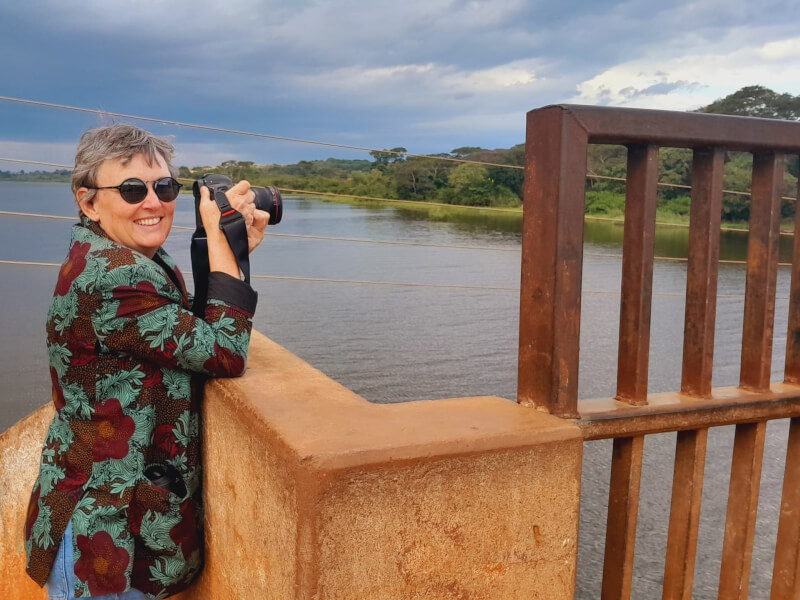
Lesley Green, member of The Club of Rome and Director of Environmental Humanities South, dives into how native knowledge can help us reimagine our relationship with the planet in an interview with communications fellow Yvonne Wambua.
As a member of The Club of Rome, you are part of a global network committed to long-term thinking and systems transformation. What drew you to The Club of Rome and what does being part of this community mean to you personally?
It wasn’t so much what drew me to the Club of Rome, but who. I reconnected with Mamphela Ramphele, who had been Vice-Chancellor when I graduated from the University of Cape Town — she even signed my PhD certificate. She introduced me to Carlos Álvarez Pereira and we just couldn’t stop talking about environment, economy, justice and society.
Joining The Club of Rome meant finding many people who were thinking in integrative ways, not staying in their disciplinary boxes. Working in transdisciplinary spaces can be lonely, so meeting others who connect across science, governance, activism and business was refreshing. The Club of Rome is unique because it brings together people who are thinking deeply about transformation from many directions. It’s a community of people asking how we can live well together on this planet and that’s what I value most.
What first opened your eyes to a broader view of the environment and how did this shape your founding of Environmental Humanities South and influence your path to being a member of The Club of Rome?
About twenty years ago, I worked in the Northern Amazon on a post-doctoral project that was supposed to last six months. It ended up taking ten years and changed everything about how I understood the world.
I went there thinking about environmental history, but the people I worked with didn’t talk about history in terms of time. They talked about it in terms of place. Knowledge wasn’t valued because of recognition from an academic institution; it was about whether it made you a moral person and helped your community thrive.
That experience reshaped my thinking completely. When I came home, I designed a graduate course called Tradition, Science and Environment, which grew into my book Contested Ecologies. Then I co-founded Environmental Humanities South with Frank Matose and a wider team.
We wanted to create a space where young scholars could think and write from their own landscapes, in the languages they live in. To bring their grandmothers’ knowledge into conversations with academia, posing related research questions. That led to our book Reclaiming African Environmentalism, which gathers voices reclaiming what it means to care for the Earth in African terms.
The Critical Zones Africa project brings together natural and social sciences in unique ways. Can you share some insights on this work?
The Critical Zones Africa project is supported by the Science for Africa Foundation, the Wellcome Trust and UK Aid. It’s a six-country collaboration asking one big question: What bio-geophysical and social relations make a place habitable?
We’re shifting the focus from global sustainability to local habitability. “Saving the planet” can feel abstract, but asking how to make a community’s soil, water and social life habitable is concrete.
In Malawi, for example, decades of development advice that ignored the soil led to catastrophic topsoil loss, averaging more than 30 tonnes per hectare per year. That destroyed the ecological base of the economy. After the Ukraine war, fertiliser prices skyrocketed and Malawi’s economy began to collapse.
Critical Zone Science looks at how soil, water, air and life interact. It’s like a general practitioner’s approach to the Earth, that resonates deeply with African philosophy, where soil isn’t just matter but ancestry, belonging and life itself. Amílcar Cabral, who trained as a soil scientist before becoming a liberation leader, taught that if you want sovereignty, take care of your soil. That captures the heart of our work.
The Club of Rome calls for deep transformations to secure a just and sustainable future. From your perspective, what can we learn from African eco-politics to achieve this?
African eco-politics begins from the understanding that humans and the Earth are not separate. There is nothing in my body that doesn’t come from this Earth.
Modernist thought still treats people and planet as distinct, but in many African traditions, the relationship to soil and land is moral and ancestral. It’s about care and belonging. You see this in the work of thinkers like Cabral, Wangari Maathai and Ngũgĩ wa Thiong’o.
What the world can learn from that is the humility that comes from a sense of being part of the Earth, not above it or surrounded by it. That’s the foundation of any just and sustainable transformation.
Much of your work challenges extractive paradigms and calls for regenerative alternatives. How do you see the concept of regeneration evolving and what lessons might it offer to global sustainability movements?
Take Xolobeni, on South Africa’s east coast. It’s one of the last areas where Indigenous settlements survived both colonial and apartheid displacement. People there live richly from their land.
A titanium mine threatens to strip that away to supply solar panels and coral-safe sunscreen. And I keep asking: what’s the point of destroying a living landscape in the name of environmental sustainability? That’s where environmentalism risks slipping into eco-fascism.
Regeneration must start with protecting habitability that is ensuring both people and ecosystems can thrive. We also need to rethink energy. Energy isn’t circular; once you burn it, it’s gone. So, regeneration isn’t just about recycling materials but about rethinking how we live and what we value.
How are you involved in The Club of Rome’s work, and could you share insight into some projects that you are particularly proud of?
I was part of the founding team of the Earth-Humanity Coalition in 2024, which The Club of Rome supported as part of the UN’s International Decade of Sciences for Sustainable Development. It was an inspiring space to think about how science can serve society.
In 2024, I represented The Club of Rome at the UN Summit of the Future in New York. The Secretary-General told young people, “My generation messed up.” That moment of honesty meant a lot, it opened space for real intergenerational dialogue.I’ve also been working to connect networks for example, linking The Club of Rome with The Pan-African Climate Justice Alliance, which operates in over 50 countries. It’s about building bridges of solidarity and shared learning across continents.
In your view, what is one idea, practice, or story that could help the world reimagine its relationship with the planet, and what would it take to make that vision actionable across systems?
I often tell my students about René Descartes, the philosopher who separated the “spiritual” from the “scientific” to stay safe from the Church. That split between mind and matter, people and nature still shapes science today. We act as if society and nature are separate, but they’re not. There’s nothing in our bodies that isn’t from the Earth. We make our world together every day, through how we live and act. It’s time to stop trying to solve 21st-century problems with 17th-century frameworks. And see the Earth not as “out there,” but as us, the collective social bio-geophysical us.
No comments yet