
We are teaching children to fix problems, but not to prevent them
By Martin Mbewe, 2025 Communications Fellow at the Club of Rome, Multimedia Journalist & Development Communications Specialist
30 March 2026
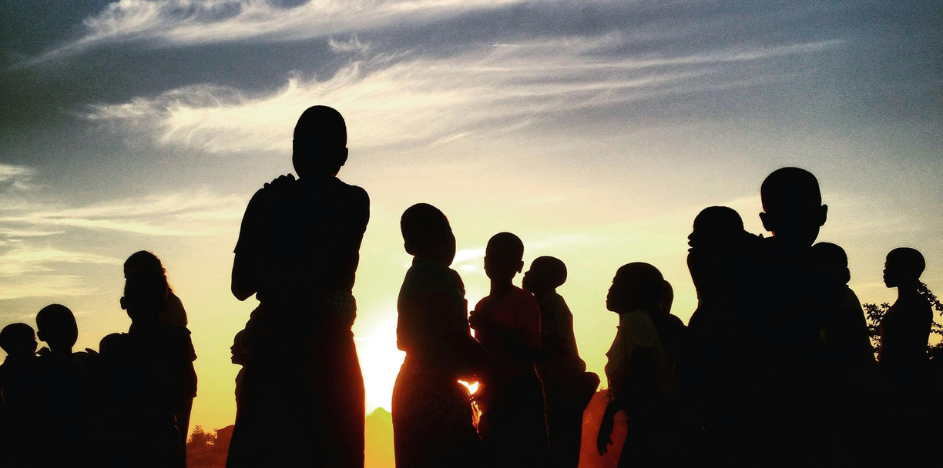
Credit: Pexels
What if floods and droughts are not where our problems begin, but where they finally become visible? Before floods wash away homes or droughts empty our fields, something deeper has already gone wrong. The problems we see are rarely the place where they begin. They grow quietly through choices repeated over time and visible connections we fail to notice. As climate change tightens its grip on communities worldwide, we must ask ourselves whether we are treating the symptoms or confronting the system, the root cause that keeps producing them.
One place where these systems are shaped is in our classrooms. Education is where young people learn how to see the world, long before they are asked to fix it. Yet for many years, our education systems have focused almost entirely on skills such as calculating, coding, building, extracting and producing. These skills matter. They are necessary. But skills without perspective can be dangerous.
Across the world, children are taught science, mathematics, geography, agriculture, technology, economics and business studies. They are encouraged to innovate, discover and contribute to development. In many cases, they succeed: new ideas emerge, industries grow and jobs are created. But too often, the question of consequences is not addressed in the classroom.
We produce graduates who can design factories, but not citizens trained to ask what those factories release into the air. We celebrate productivity without teaching what happens when land is pushed beyond its limits. We reward extraction without pausing to consider what remains for future generations. Progress moves quickly, but understanding of consequences struggles to keep pace.
Climate change exposes this gap more clearly than any other crisis. In Malawi, heavy rains in December 2025 triggered floods that displaced thousands of families, destroyed homes and crops and cut off roads in some districts, leaving communities isolated and vulnerable. Across Africa, countries such as Kenya and Nigeria have faced deadly floods and prolonged droughts that have uprooted communities and strained food systems. Kenya’s capital recently experienced severe flash floods that killed tens of people. In Europe, record heat and wildfires have swept through parts of Greece and Spain, while powerful storms have flooded towns and disrupted transport networks. In North America, recurring wildfires, hurricanes and extreme storms have destroyed property and forced mass evacuations. Different places. Same pattern. Climate change is no longer a distant warning; it is a shared global reality.
This is where systems thinking becomes important. It helps us understand that nothing exists in isolation. It teaches us to see how one decision sets off a chain of reactions, some visible, others hidden. It reminds us that corruption, inequality and climate change are not separate challenges, but interconnected forces that reinforce one another.
Consider energy use in Malawi. For many households, firewood and charcoal are not choices but necessities. Trees are cut daily to meet basic needs. Yet trees do more than provide fuel. They protect soil from erosion, help regulate rainfall, store water, clean the air and provide medicine, food and shade. When trees disappear, the land becomes bare. Bare land invites floods, dust and drought. Respiratory illnesses increase. Water sources dry up. Food production declines.
A population struggling with illness and hunger cannot develop easily. A country facing environmental degradation spends more time responding to crises than planning for the future. The cycle continues.
What is painful is that we keep educating children who will walk straight into this cycle. Some will unknowingly contribute to the problem. Others will try to solve it. But very few are taught to understand the system that creates it in the first place.
It is currently the rainy season in Malawi, a perfect time to plant trees. Yet if you ask people whether they have planted even one, very few will say yes. But ask how much they rely on products that come from trees (charcoal, furniture, paper, building materials) and the answer is obvious. We consume every day, but rarely pause to reflect on where these resources come from or what happens when they are exhausted.
This disconnect is not a failure of intelligence. It is a failure of perspective.
If systems thinking were taught early in schools, children would grow up understanding that their actions affect others, the environment and future generations. They would learn that solving complex problems requires cooperation, not isolated effort. They would see that real development is not about short-term gain, but long-term balance.
Systems thinking does not replace skills; it strengthens them. It turns innovation into responsibility. It transforms knowledge into wisdom. It reminds us that prevention is often more powerful than repair.
If we want to respond seriously to climate change, we must start where mindsets are formed. Education should not only prepare young people for the job market. It should prepare them for citizenship in a connected world. Skills will always matter, but without systems thinking, they rest on a weak foundation.
And as with any building, a weak foundation, no matter how impressive the structure above it looks, will not hold.

Well written, Weak foundation suffers many generation not just one. Education can promote literacy but does it provide virtue? Impression from thought is another way to show action into social responsibility and transform knowledge into wisdow. For that, we are accountable in growth of young ones.
that is what we all need to understand.
Profound! When children learn systems thinking, they grow up understanding that every action matters—to people, the planet, and the future.