1972
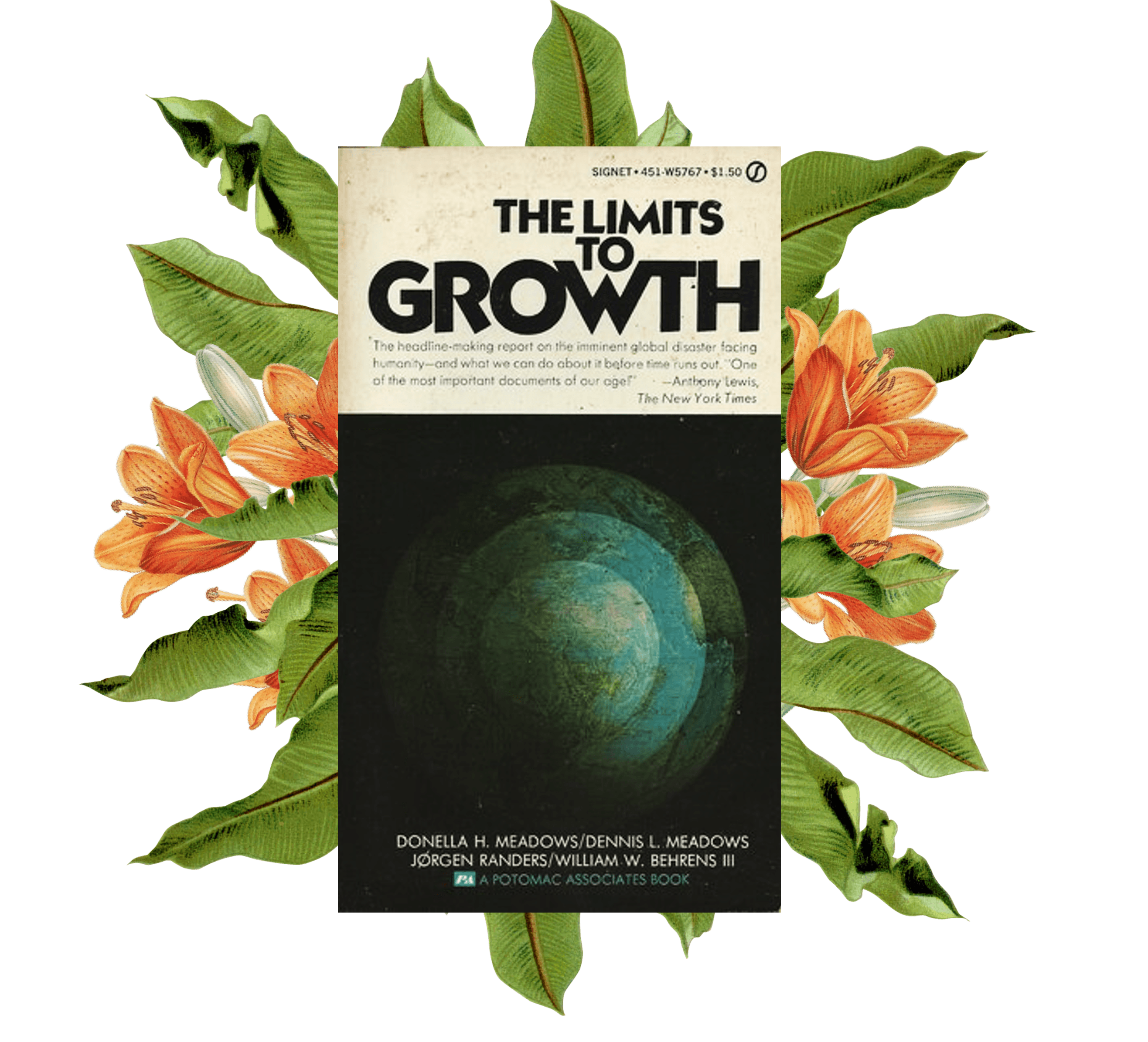
The Limits to Growth
The first report to The Club of Rome, The Limits to Growth, warns that Earth’s interlocking resources – the global system of nature in which we all live – probably cannot support present rates of economic and population growth much beyond the year 2100, if that long, even with advanced technology. It shows how the combined effects of pollution and the exhaustion of resources threaten the stability of life on Earth. At the same time, it opens space for possibility: humanity could choose a path that respects Earth’s limits while pursuing equitable human wellbeing.
1979
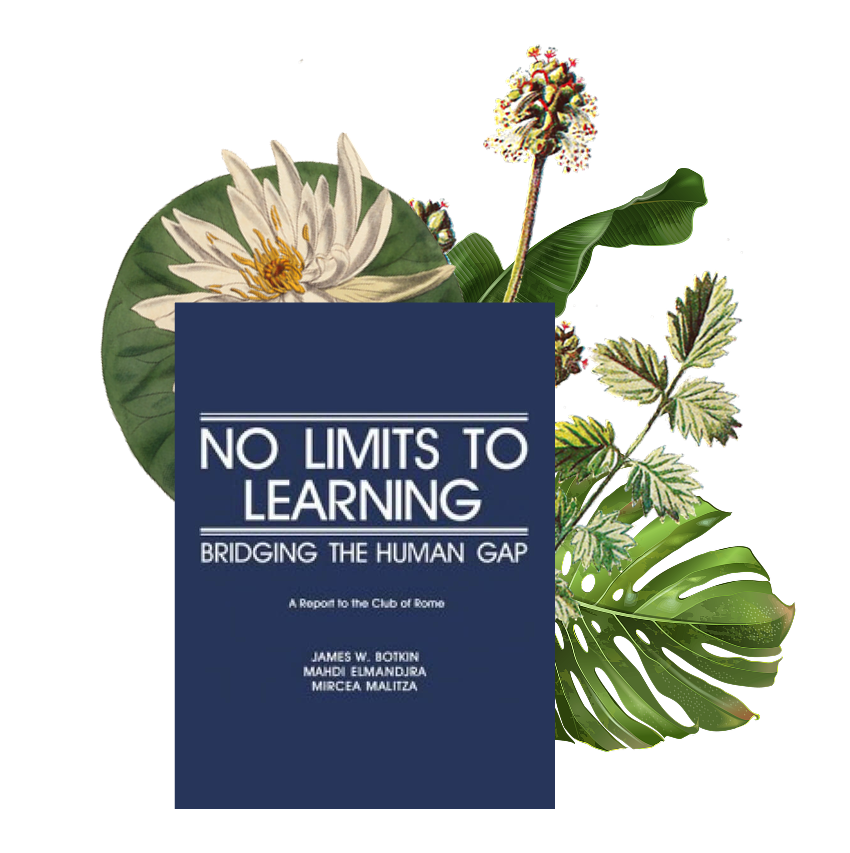
No Limits to Learning
Seven years later, The Club of Rome reframes the challenge. No Limits to Learning argues that humanity must realise its full learning potential to bridge the “human gap”: the widening distance between our capacity to act and transform the world, and our ability to understand and manage the consequences of our actions.
It raises an unsettling question: could our dominant forms of intelligence themselves contribute to a potential civilisational collapse?
1980s–2010s
The warning endures
Over the following decades, evidence accumulates that the concerns raised in both reports were prescient. Many societies continue to rely on extractive and exploitative systems. Pollution intensifies, ecosystems deteriorate and inequality deepens. Despite advances in knowledge and technology, humanity struggles to respond adequately to the crises identified in the 1970s.
2015–2020
Global frameworks fall short
The UN Agenda 2030 and other global initiatives seek to address complex planetary and social challenges. Yet their implementation reveals a persistent sense of stuckness. As UN Secretary-General Antonio Guterres warns, humanity is “waging war on life”, risking its own destruction.
2022
The creation of The Fifth Element
Against this backdrop, The Club of Rome launches The Fifth Element programme. It arises directly from the contradictions highlighted in the earlier reports: technological and economic progress continues, yet our collective ability to learn, adapt and heal lags behind.
The programme positions learning, not as the delivery of knowledge, but as a lifelong, relational and co-created process, and as central to the future of humanity.
2022–Present
A new way of seeing and an invitation to reimagine progress
Today, the Fifth Element stands as an open invitation to safeguard life through interconnectedness, humility and hope. Building on 50 years of thought from The Club of Rome, it responds to the enduring insight that humanity will not navigate its future challenges through data and analysis alone. A deeper transformation of how we learn, understand and act is essential.
Rather than providing another blueprint, the programme cultivates new ways of seeing, sensing and relating. In an era of multiplying polycrises and breached planetary boundaries, it encourages humanity to reconnect mind and matter, spirit and system.