
The taste of soil
By Daniel Daruty de Grandpré, Programme Associate at The Fifth Element and James Granelli, Communications Officer at Environmental Humanities South
7 August 2026
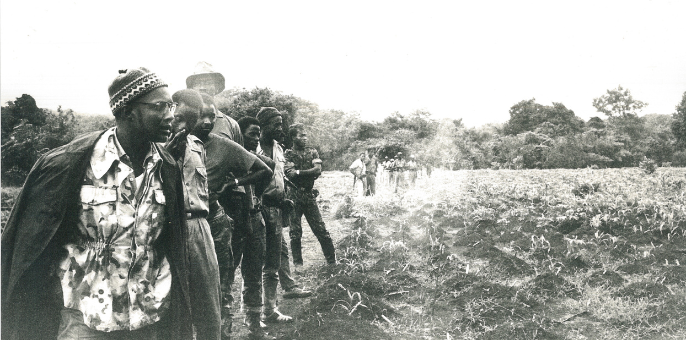
Credit: A photo of Amílcar Cabral from the archive of Fundação Amílcar Cabral
What does your soil taste like? When last did you notice its grainy, loamy texture? The way it smells after the rains. The creatures that call it home. Soil relationships underpin our economies, societies and cultural life, yet they are in a dire state. With 65% of Africa’s arable land degraded, and only getting worse with the unfolding climate crisis, we urgently need to rethink how we understand and repair our soils beyond the status quo. What worlds, relations and futures become possible when we expand soil’s scientific legibility? If we cared about the soil’s taste as well as its p-value? When memories, politics and histories become inseparable from statistics, graphs, and chemistry?
These questions sit at the heart of what three days of the African Environmentalism of Soil webinar series surfaced. The series, a collaboration between The Fifth Element, an initiative by the Club of Rome, the University of Cape Town’s Environmental Humanities South and Critical Zones Africa, set out to explore soil as both chemistry and politics. In an early session, Lesley Green, Professor of Earth Politics and Director of Environmental Humanities South, noted that seven of our nine planetary boundaries depend directly on soil, and yet there is no dedicated Sustainable Development Goal for soil itself. We readily talk about biodiversity above ground, yet far less is said about rich and dependent biodiversity underneath it.
That underground complexity carried real political weight for the figure the series closed on: Amílcar Cabral. Day three’s session launched To Defend the Earth is to Defend the Human: Amílcar Cabral on Soil, Society and Freedom, a new translation of Cabral’s writing edited by Anselmo Matusse, Carlos Lopes and Lesley Green.
Cabral is remembered as an anti-colonial leader in Cape Verde and Guinea-Bissau, yet little recognition is given to his agronomy career that preceded and, quite literally, grounded his politics. During the launch, the authors drew attention to how Cabral saw Africa’s independence from colonial powers as resting on care-based, human-soil relationships. The same relationships that had been destroyed under colonial rule. For Cabral, returning to these care-based relations involved understanding the soil as a living, evolving, cultural and historical substance. Relations of rock, air, microbes and rain were interdependent with relations of being, family, land, ancestry and politics.
The same conviction runs through a string of African sayings gathered by Green and offered in her presentation on day one: In Shona: “Mwana Wevhu”: “sons and daughters of soil”. Maasai: “the earth is our mother”. Oromo: “Lafi keenya lafee keenya”: “my land, my bones”, and, closing the list, an Igbo saying: “Ala adighi mma bu uru ndi nze”: “bad soil breeds bad leaders.” Different languages, different geographies, yet soil relations surface again and again as the moral and ethical foundation for landscape care.
Returning to these relations is far from a simple task. As one participant put it: “How do you love a soil you were forced onto?” How do you build relationships with land that’s not yours? Land with histories of dispossession and soils depleted by extensive commercial fertiliser use. Across the sessions, the conversations navigated this complexity with an invitation to build unlikely alliances in a time of crisis. As Nikiwe Solomon, Director of Environmental Humanities South, put it: “to call in rather than call out.”
The same refusal to let things resolve neatly ran through the discussion on how we come to know the soil in the first place. One contributor in the room spoke of the Indigenous method of reading soil through taste, colour and smell, asking how seriously this kind of knowledge is taken in the rooms where soil science and policy get decided. Edina Peter Nyambugai, Assistant Lecturer in Development Studies at the National Institute of Transport, described how the commercialisation of crops has quietly eroded people’s relationship with the land that grows them; production goes up, and relational memory goes down.
The contributions on the relational and local knowledge of soils were not positioned to replace soil science, but to ask us to stretch what counts as evidence within it. As Hugo ka Canham, Professor of Black Planetary Studies at the University of South Africa, reflected: what if science was held “more loosely and with a bit more suspicion”? What types of knowledge rise to the surface and which different visions of repair become possible?
Rather than hiding from the uncomfortable conversations, blending these different perspectives required disagreement, as we saw in a discussion on the use of technology and artificial intelligence (AI) in soil science. An online attendee asked the panellists whether using AI and satellite technology in agriculture opens new doors to neocolonialism and technocratic solutionism, “shouldn’t we be wary of embracing it?” In the room, another participant pushed back with the argument that disengaging from technology out of suspicion doesn’t protect agency; it forfeits it. “We shouldn’t disconnect just because we don’t like people or processes or institutions; that robs us of any assets and agency that we have.”
With tangents on technology, geopolitics and relationality fleshing out the discussions, one question kept returning, despite never being named directly. How do we teach people to ask what their relationship to soil is? A great deal of effort goes into building scientific literacy. Far less goes into building relational intelligence, the capacity to notice and tend the relationships we’re already inside of. This was a concern raised by Ma Hazel, an activist and farmer from Mfuleni, Cape Town, as she highlighted the disinterest of youth in farming, in getting their hands in the soil, and understanding these relationships.
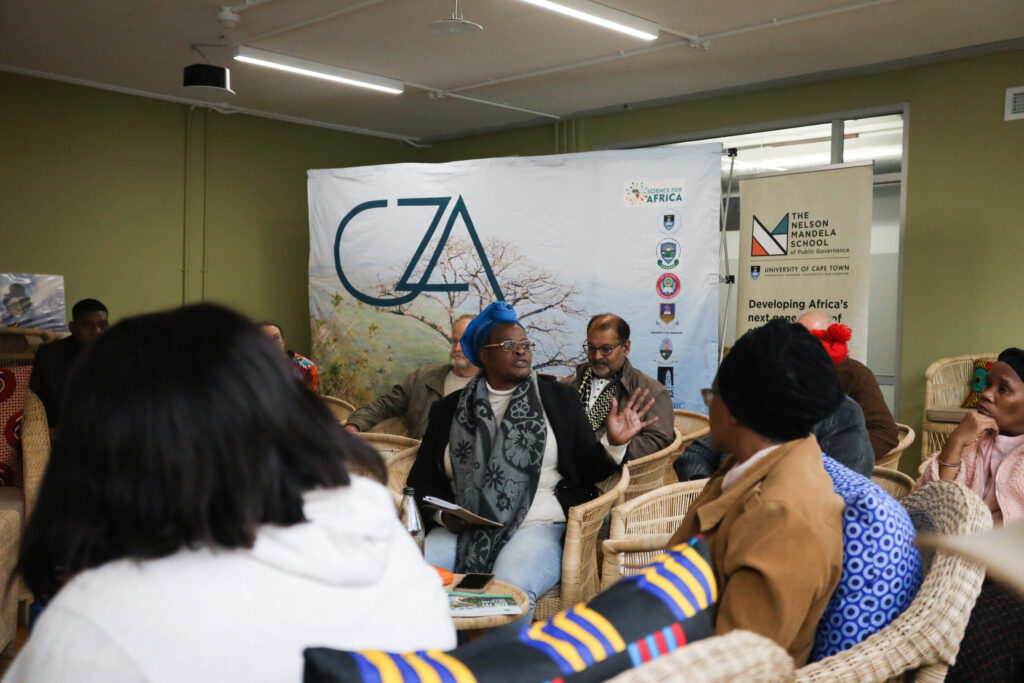
Soil science tends to sit in a box broadly marked as “natural science,” at a careful distance from any form of social or political discourse. This series of webinars invited us to break down this division. To hold science a little more “loosely and with a little more suspicion” of its own boundaries. Not to abandon it, but to notice what it has, historically, refused to consider legible. The sessions called for us to foster better relations for better soils. Relations between different types of knowledge, opposing visions of the future, and between soils and society.
This series was one cluster in a longer programme; more sessions on African environmentalism are still to come, and you can follow what’s next and find the recordings for the sessions on The Fifth Element.
No comments yet